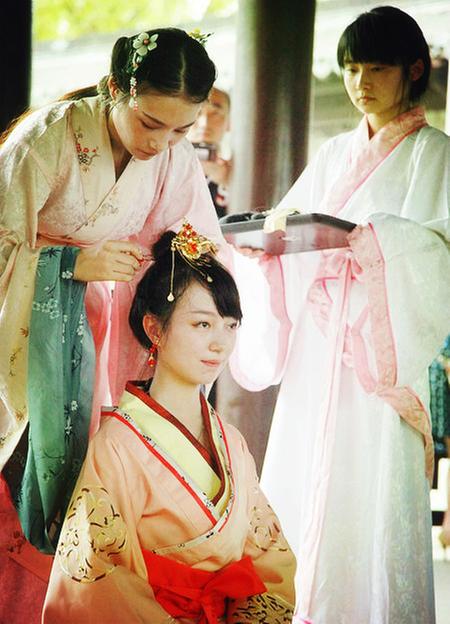
Hair-Pinning Ceremony
Overview
The Hair-Pinning Ceremony, known as "ji li" in Chinese, is an ancient rite of passage marking a girl's transition into adulthood in Chinese culture. It is a significant event traditionally held when a girl reaches the age of 15. This ceremony has deep roots in Chinese history, dating back over 2,000 years, and was predominantly practiced by noble families. The ceremony is one of the key Confucian rites, alongside the capping ceremony for males, marriage ceremonies, mourning rites, and sacrificial rituals.
The Hair-Pinning Ceremony is documented in the "Li Ji" or The Book of Rites, a collection from the Zhou Dynasty (c. 11th century-256 BC) that outlines social norms and ceremonial practices. The ceremony signified the girl's entry into adulthood, granting her the societal status to marry and assume family responsibilities. Originally, only girls from noble families could partake in this ceremony, which was sometimes postponed until the wedding day if the girl was not engaged by 15.
Ceremony Details
The ceremony's name, "ji li", derives from "ji", a type of bamboo hairpin used during the rite. Before the ceremony, a girl would style her hair into a bun at the top of her head. The rite involved a respected married woman, often a relative, placing a hairpin into the girl's bun. This act symbolized her new status as an adult. Post-ceremony, the girl was expected to learn domestic skills essential for her role as a wife, including appropriate speech, dress, and needlework.
Cultural Significance
The Hair-Pinning Ceremony, together with the male capping ceremony, forms part of the "four rites" that denote significant life transitions and societal roles. These rites were essential in Confucian culture, emphasizing the individuals' responsibilities within the family and society. The Hair-Pinning Ceremony specifically underscored the importance of women’s roles within the household and as bearers of family honor and tradition.
Modern Depictions
The Hair-Pinning Ceremony continues to capture the imagination in modern media, such as in the Chinese costume drama "The Double." The drama, which reflects customs from various Chinese dynasties, showcases a jili ceremony in one of its episodes. This series has gained international attention, streaming on platforms like Netflix, and highlights the enduring fascination with traditional Chinese rites and aesthetics. Such media representations help to preserve and promote Chinese cultural heritage to a global audience.
Revival and Cultural Influence
In recent years, there has been a resurgence of interest in traditional Chinese ceremonies and clothing. This revival is part of a broader movement to reconnect with Chinese cultural roots, influenced by modern technology and social media platforms. Events like the Hanfu Cultural Festival have become popular, drawing thousands of attendees interested in traditional Chinese attire and customs. The Hair-Pinning Ceremony is often re-enacted as part of these cultural celebrations, symbolizing a bridge between ancient traditions and contemporary cultural identity. Article reference1. Series is a fashion treat for viewers. chinadaily.com.cn. 20242. Culture Insider: How ancient Chinese welcomed youth into adulthood. chinadaily.com.cn. 2017Photo Gallery(3 pictures)CategoriesCultural HeritageTagTraditional CustomIntangible Cultural HeritageRelatedCapping CeremonyCatalogue1. Overview2. Ceremony Details3. Cultural Significance4. Modern Depictions5. Revival and Cultural Influence- - - []








